

Our History & Heritage 
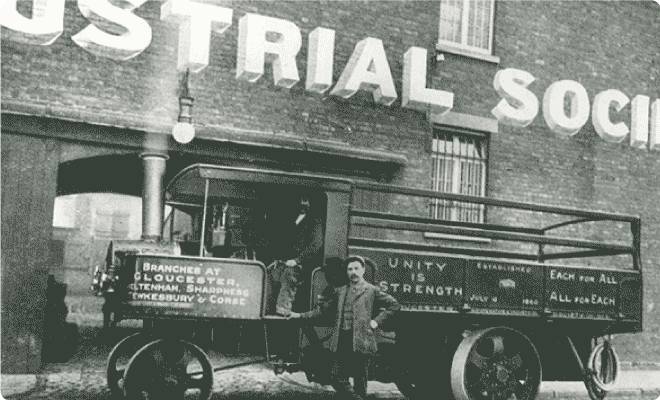
Founded on Fairness
Our history dates back to the 19th century, when the first co-operative society was established. With the Industrial Revolution in full swing, many working people found it hard to find decent food at a fair price.
1844 saw the birth of the first successful retail co-operative, started by the Rochdale Pioneers. They opened their humble shop on Toad Lane, Rochdale, with the aim of supplying quality goods at fair prices, to help fund their own community.
Growing and Giving
Just over 40 years later, 1,400 societies had been set up across the UK, with even more elsewhere. As times changed, a lot of these had to combine to create larger, more efficient organisations.
Swindon, Gloucester, Walsall, Chipping Norton, Oxford, and Cinderford all set up their own societies within 20 years of each other. There were a dozen more across the region by the end of the 19th century, and slowly, they all began to merge. Together, they formed Oxford, Swindon and Gloucester Co-op; and West Midlands Co-op. Finally, in 2005, we joined together to form The Midcounties Co-operative that you know today.
Still Standing Strong for Equality
Over the past century, our spirit has only become more focused. Providing our communities with the goods, support and funding they need to live better. We continue to give back to our local areas with every purchase made. And we mobilise colleagues and members to support community projects, working to clear targets of how we can give back to each community we serve.